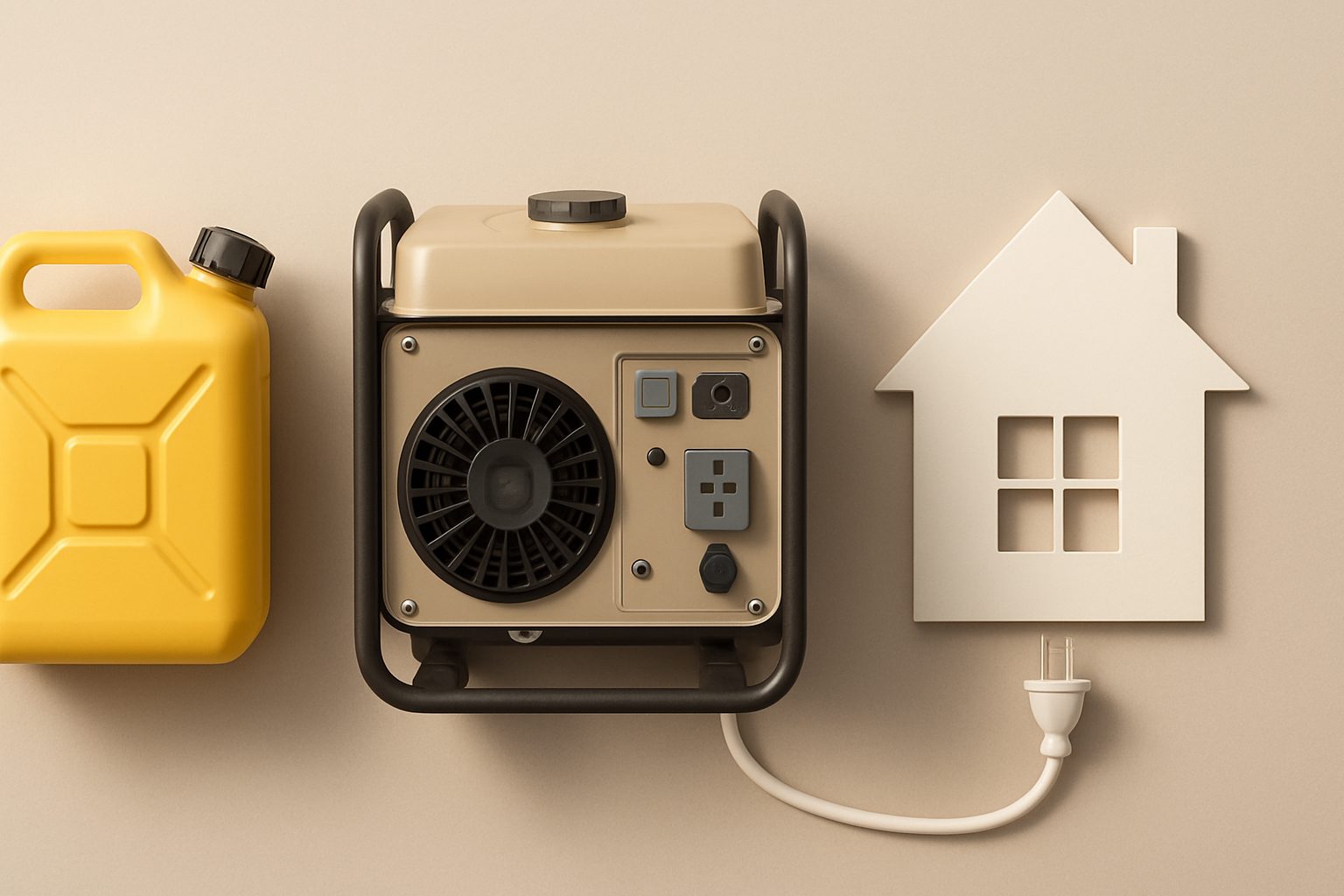
Best 5kW Petrol Generator for Home Use UK: Powerful Backup Reviewed
A 5kW petrol generator sits in the sweet spot for most UK households needing emergency backup power. It's strong enough to run essential appliances simultaneously—your boiler, fridge, lighting, and a few other circuits—without the bulk, cost, and permanent installation of larger standby units. If you're weighing options, the choice between models often comes down to electric-start convenience, how long you need to run between refuels, and whether you plan to integrate it with a transfer switch for hands-free switchover.
Why 5kW for Home Backup?
A 5kW generator handles the basics. Your gas boiler (typically 1–3kW), a fridge (0.6–1kW on startup), lights, and a kettle or microwave can run together without overloading. You won't power your whole house—central heating and multiple high-draw appliances simultaneously will trip the unit—but you'll keep the essentials going during a mains outage.
Going larger adds weight, noise, and cost. Going smaller means difficult compromises: your boiler starts, the fridge cuts out, or you're choosing between heating and hot water. Five kilowatts is realistic for real-world home use without requiring a dedicated fuel tank or planning permissions.
Manual vs Electric Start: The Practical Difference
The standard way to start a petrol generator is pulling a cord. It works, but it's awkward when you're tired, in the dark, and dealing with a power cut. Manual-start units are cheaper and simpler—fewer things to fail—but they demand physical effort every time.
Electric start changes the equation. A small battery and starter motor mean you press a button (or flip a switch on a control panel). On a cold morning or after months of storage, that single difference is worth the modest extra cost. Most 5kW units with electric start also run an automatic choke, so you're not fiddling with levers either.
The reliability trade-off is small. A quality electric-start unit from a reputable brand is just as dependable as its manual equivalent. The battery is recharged by the generator itself while it's running, so you don't need external charging infrastructure.
Runtime: Fuel Tank Size Matters
A 5kW petrol generator under full load burns fuel quickly—typically 1.5 to 2.5 litres per hour, depending on the engine and load. That sounds bad until you realise most of the time you're not running flat-out. Your boiler ticking over uses maybe 0.5kW; the fridge pulls power intermittently.
Tank size determines how long you can run without refuelling. Models with 20-litre tanks give you 8–12 hours at half load, which gets you through most outages. Smaller tanks (10–15 litres) might leave you topping up during the night. Larger tanks are heavier and bulkier, which matters if you're moving the unit regularly.
For truly extended outages, you'd want an additional fuel storage strategy—jerry cans stored safely—rather than relying on a bigger tank alone. Petrol degrades over time, so rotation matters.
Transfer Switch Compatibility: The Overlooked Essential
If you're serious about home backup, integrate your generator with a transfer switch. This sits between your mains supply and your consumer unit (fuseboard) and automatically or manually switches your circuits from mains to generator power without exposing the grid to generator voltage—a serious safety and legal issue.
Most modern transfer switches require a 230V single-phase output from the generator, which every 5kW home generator provides. What matters is that the generator's voltage regulation is stable. Cheap units with voltage drift can damage sensitive electronics or trip transfer switch circuits. Branded models from Honda, Hyundai, and Champion hold voltage within acceptable tolerances.
A transfer switch won't work with a generator you roll out on extension leads. If you're thinking long-term backup, budget for a certified electrician to install the switch—it's not complex, but it must be done to current wiring regulations.
Model Considerations
Hyundai HY6000SEi offers solid performance at competitive price. Electric start, around 20-litre tank, reasonable noise levels for a petrol unit. It handles inductive loads (pumps, motors) well, which matters if you're running anything other than resistive appliances. Not the quietest on the market, but reliable and good for the money.
Honda EU70is is the premium option. Expensive, but it's quiet (around 69dB), economical on fuel, and holds resale value remarkably well. The inverter technology means it's genuinely stable for electronics and appliances with microprocessors. If you're running a home office with expensive equipment, the extra cost buys you peace of mind. Electric start is standard. You're paying for Japanese engineering and a reputation earned over decades.
Champion 6250W bridges the gap: cheaper than Honda, more feature-complete than basic units. Electric start, decent tank capacity, serviceable design. Not as refined as Honda, but it works. Availability is good across the UK, and spares are easy to find.
Running Costs and Maintenance
Expect to spend £8–15 per full tank of petrol, depending on fuel prices and how much load you're drawing. Engine oil changes every 50–100 hours of running keep the unit healthy. If you're using it for standby backup only—hopefully rare—annual servicing is sensible before the winter heating season.
Petrol generators left idle for months can develop fuel system issues. Either use fuel stabiliser, drain the tank and carburettor before storage, or commit to starting the unit monthly under load to keep it ready.
The Practical Reality
A 5kW petrol generator with electric start handles genuine UK home emergencies. Grid outages lasting hours or days are rare but real, particularly in rural areas. The generator sits idle most of the time; when you need it, reliability and start convenience matter more than the difference between 4.8kW and 5.5kW output.
Choose based on realistic use: if you're moving it between locations, weight and portability favour smaller tanks and lighter frames. If it's staying in a garage or shed, a larger tank makes sense. Electric start isn't optional if you're older, less capable, or dislike yanking engine cords. Budget for proper installation with a transfer switch if you want seamless backup.
More options
- Honda EU22i Inverter Generator (Amazon UK)
- Hyundai HY3000Si Inverter Generator (Amazon UK)
- Champion 3500W Petrol Generator (Amazon UK)
- Hyundai HY6000SEi Electric Start Generator (Amazon UK)
- STA-BIL Fuel Stabiliser & Petrol Storage Can Bundle (Amazon UK)